

Reading Augmented Paper: Children's Experiences from a Simulation Study
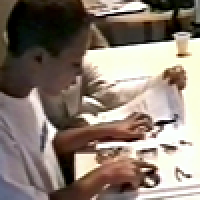
The future of reading is often equated with the use of electronic books, which support the consumption of hypertext and hypermedia on a single screen-based device. In this study we report some early findings from the exploration of an alternative future, based on the simulation of augmented paper connecting printed content to screen-based resources. Six pairs of 10 year-old children were asked to find answers to questions about nature using a printed encyclopedia, a CD-ROM version of the encyclopedia, and an augmented paper booklet that linked the two resources. They also designed their own augmented pages by annotating a double page spread on
seabirds. Although the CD-ROM was the most efficient medium for answering the questions, children thought the augmented paper booklet was more fun to use, and preferred it to the conventional book. Analysis of their behaviour, comments and designs revealed that augmented paper has the potential to radically increase the learning and comprehension of textbooks, through simple reading aloud facilities combined with multimedia explanations and demonstrations of concepts in the text.
Publication Reference
Frohlich, D.M., Tallyn, E., Linketscher, N., Signer, B. and Adams, G.: "Reading Augmented Paper: Children's Experiences from a Simulation Study", Technical Report HP Labs, HPL-2001-308, November 2001